


Salesforce Studio

Redefining app development with agentic AI

Demo / Prototype
View demo
Role
Lead Designer for
strategy, design and prototyping
Duration
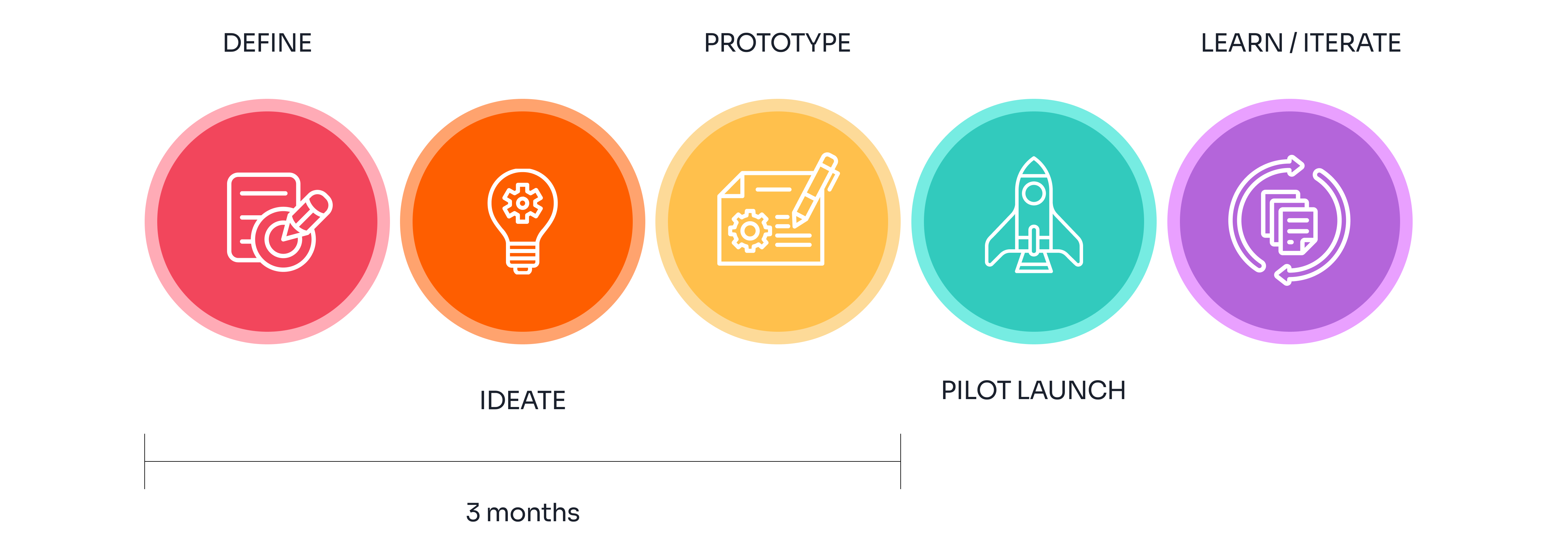
3 months
Outcome
Funnel conversion goal of ~70% met with a 4/5 usability score.
Salesforce Studio

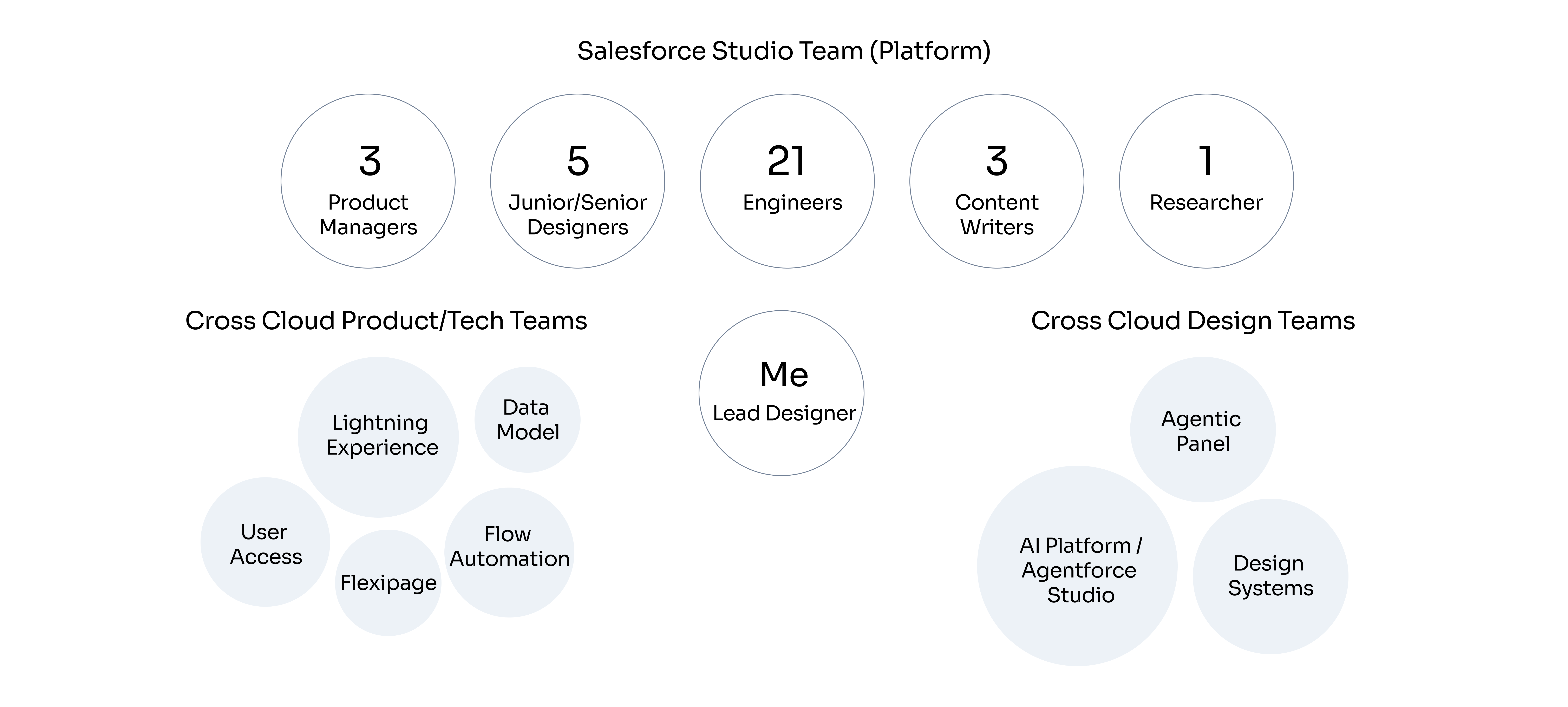
Orchestrating a large, cross-cloud collaboration

I drove cross-functional alignment across Platform and cross-cloud teams. Additionally, I presented the design vision to the EVP, established design collaboration processes, and led the modularization of UI components for the Salesforce Studio framework.

Role and Players

Building on Salesforce was complex and time-consuming

Icon 1

No clear point of entry

Users struggled to find where to start when building new applications

Icon 2

Overwhelming portfolio of tools

Too many options made it difficult to choose the right approach

Icon 3

Lack of planning assistance

No guidance on how to structure and plan app development

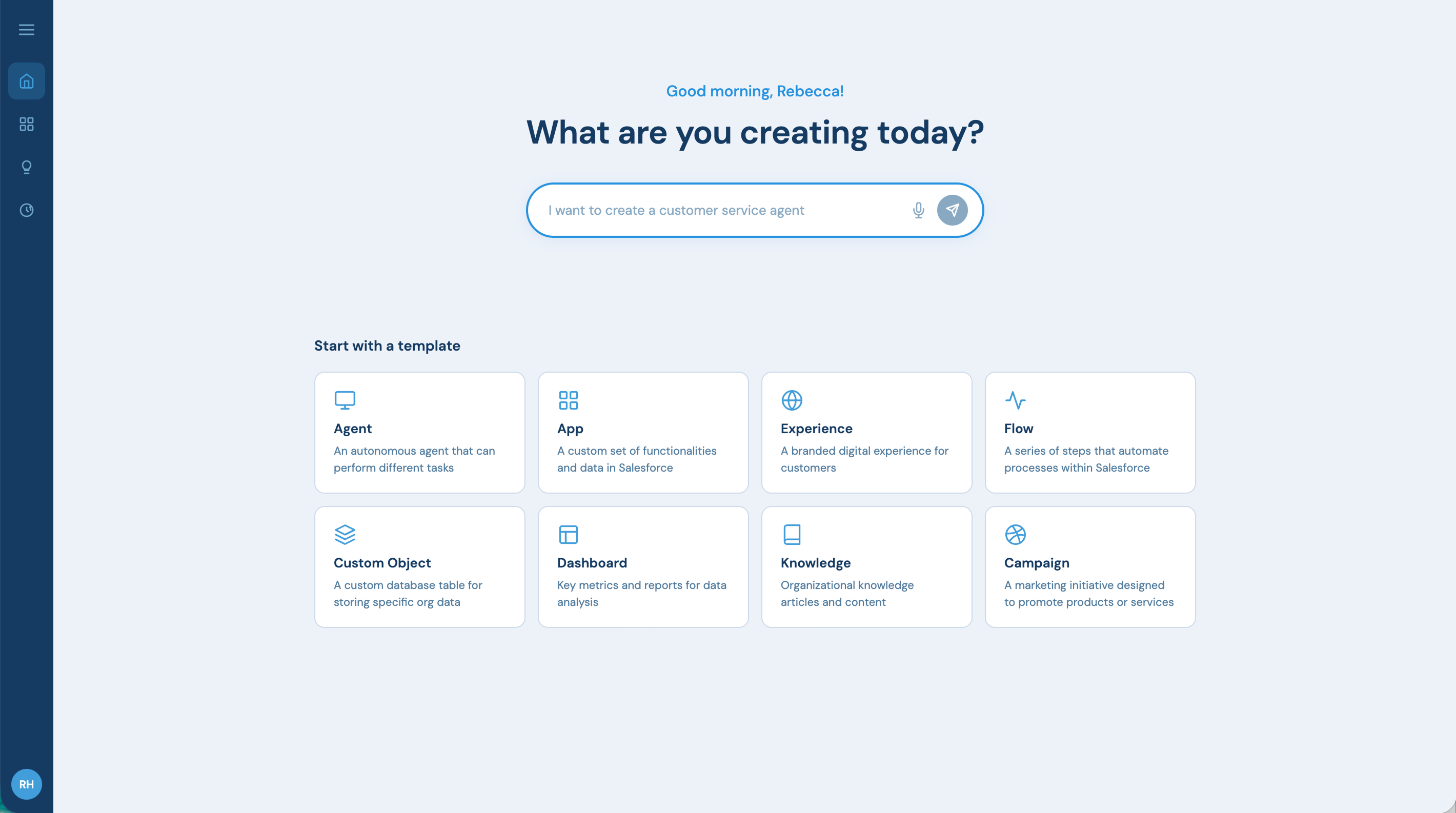
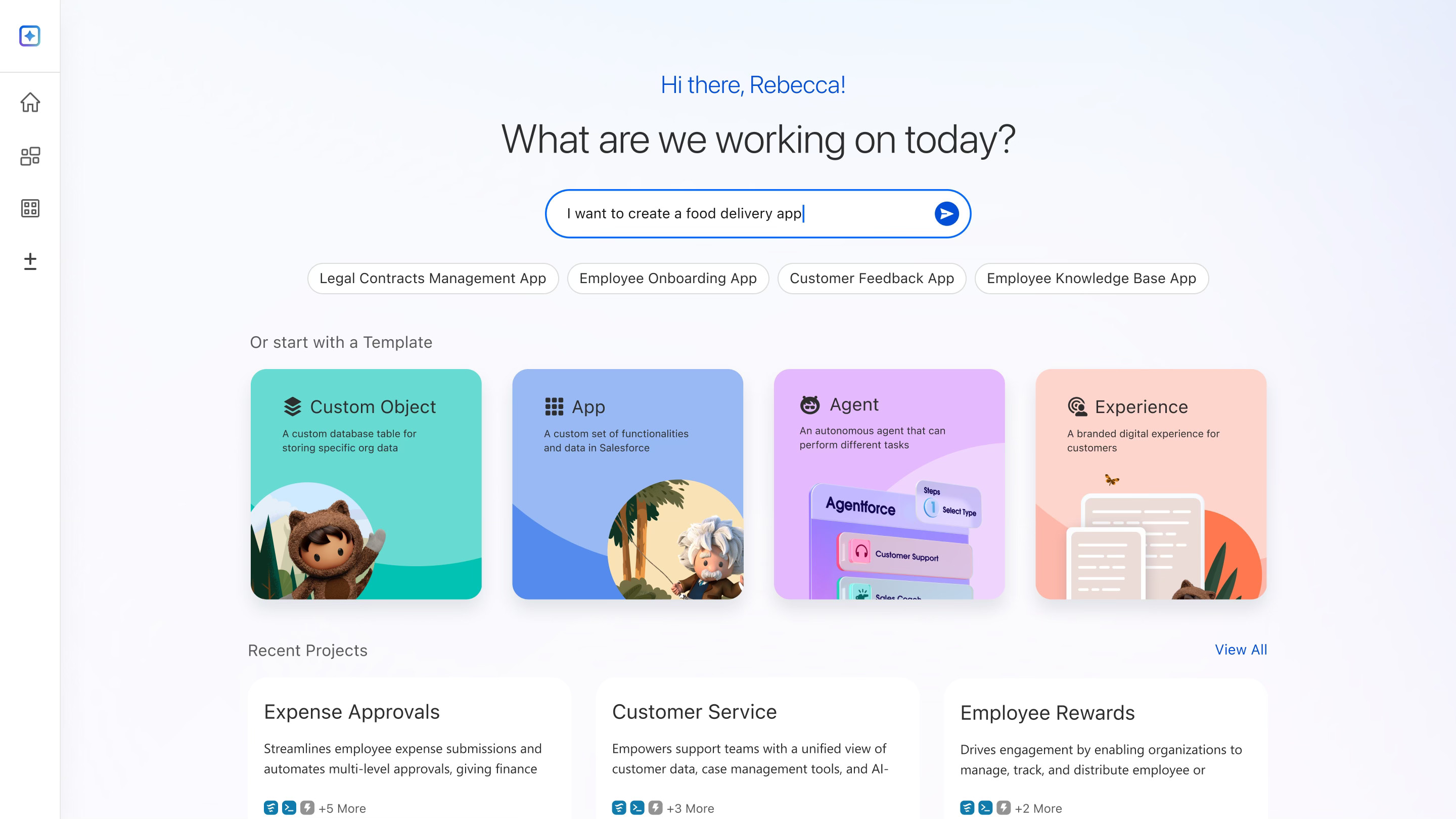
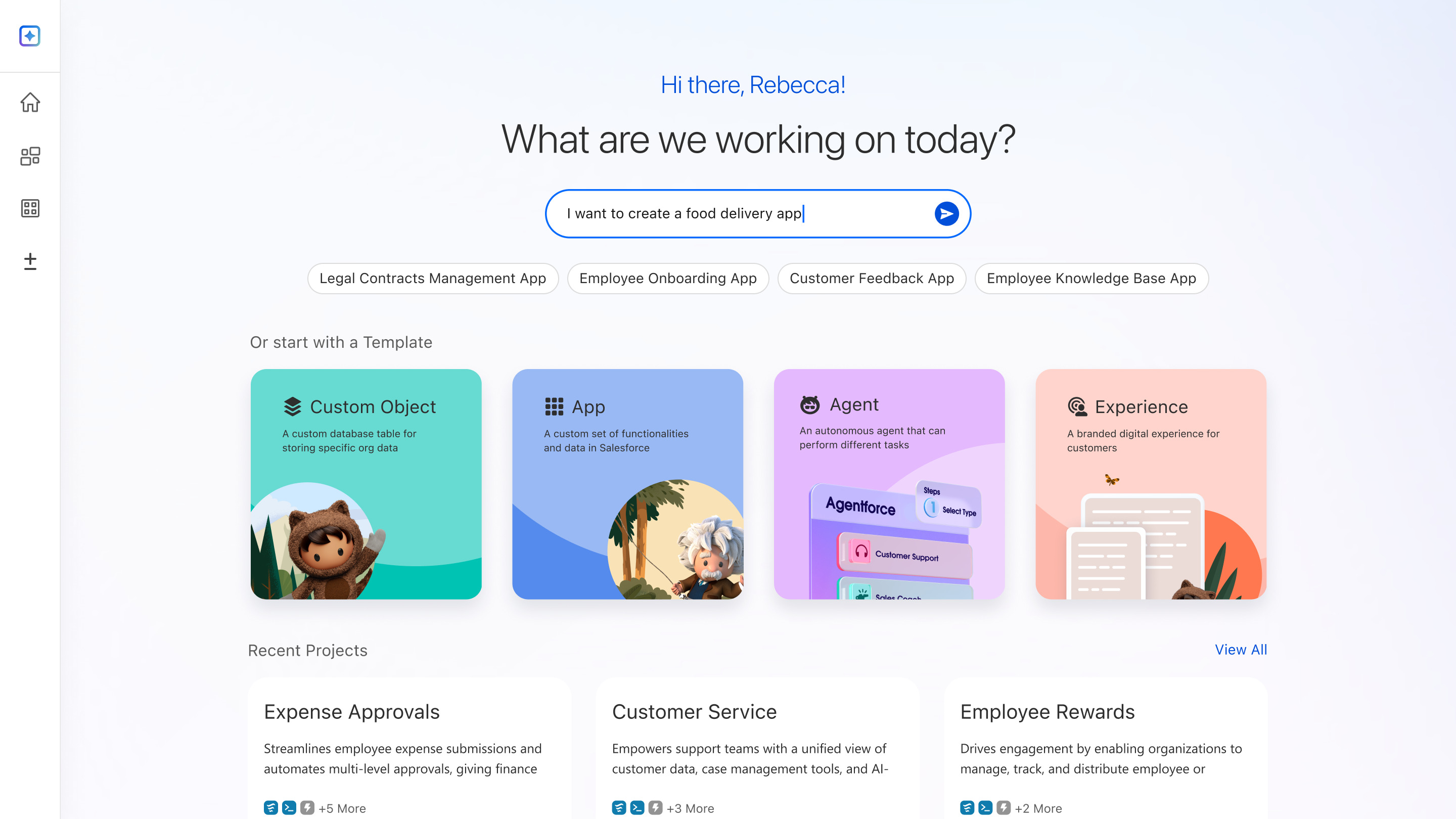
Studio Home

AI-powered planning that speaks your language

I led the UX strategy for AI Plan - a conversational interface that enables Salesforce Admins to define, plan, and execute app development through natural language. The goal: make complex development feel effortless.

Low-code admins struggle with a fragmented app-building experience

Rebecca

Salesforce Admin

Rebecca Persona

Comfortable with clicks, not code.
Dedicates most of her time to building and configuring Salesforce using declarative tools to streamline and connect business processes.

Jobs to be Done

  • Define the application's purpose and key capabilities
  • Refine and validate consolidated requirements
  • Review a detailed project plan aligned with approved requirements
  • Execute the plan with minimal manual effort to begin using the application
  • Stay informed about build status, progress, and estimated completion time

Moving fast without breaking things

I moved quickly from idea to prototype, testing concepts in real scenarios and refining them based on real user feedback - staying agile without compromising quality.

Design Process

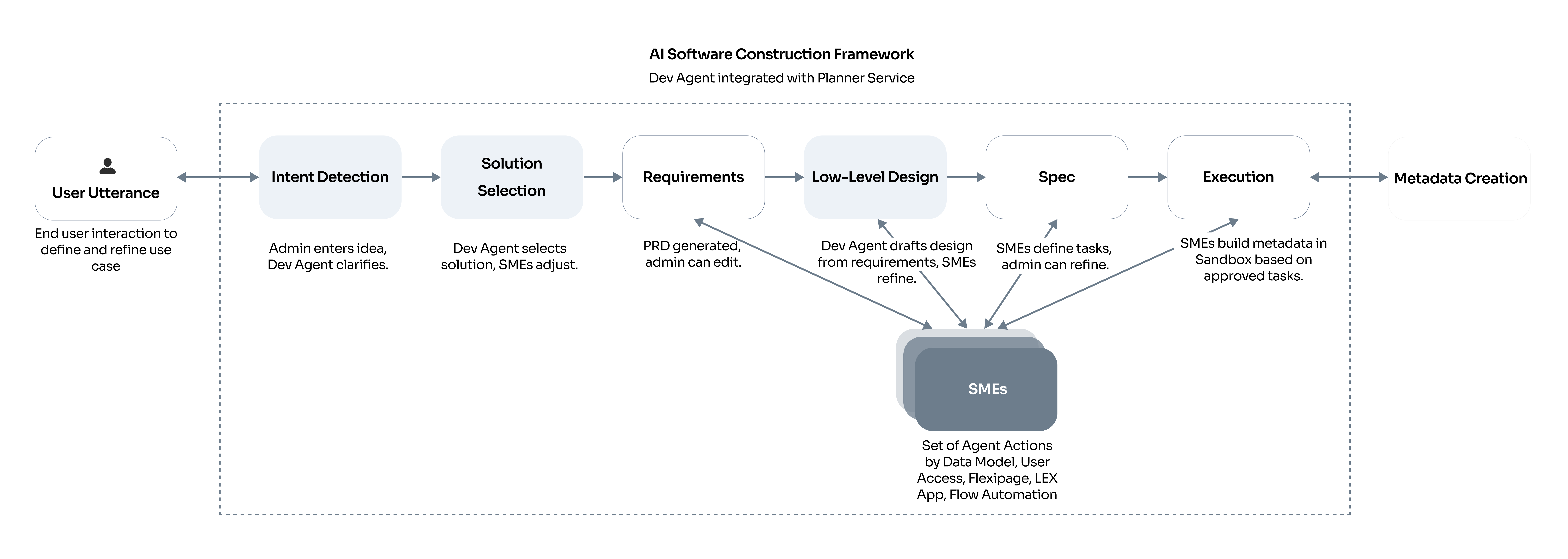
The magic happens in the framework

Subject Matter Experts (SMEs) are AI agents with specialized knowledge that automate metadata creation through refined requirements, designs, plans, and Salesforce metadata generation.

Framework

What success looked like

My Product Manager and I defined the success funnel, identifying key metrics and setting measurable goals to track engagement and end-to-end conversion.

Pilot Success

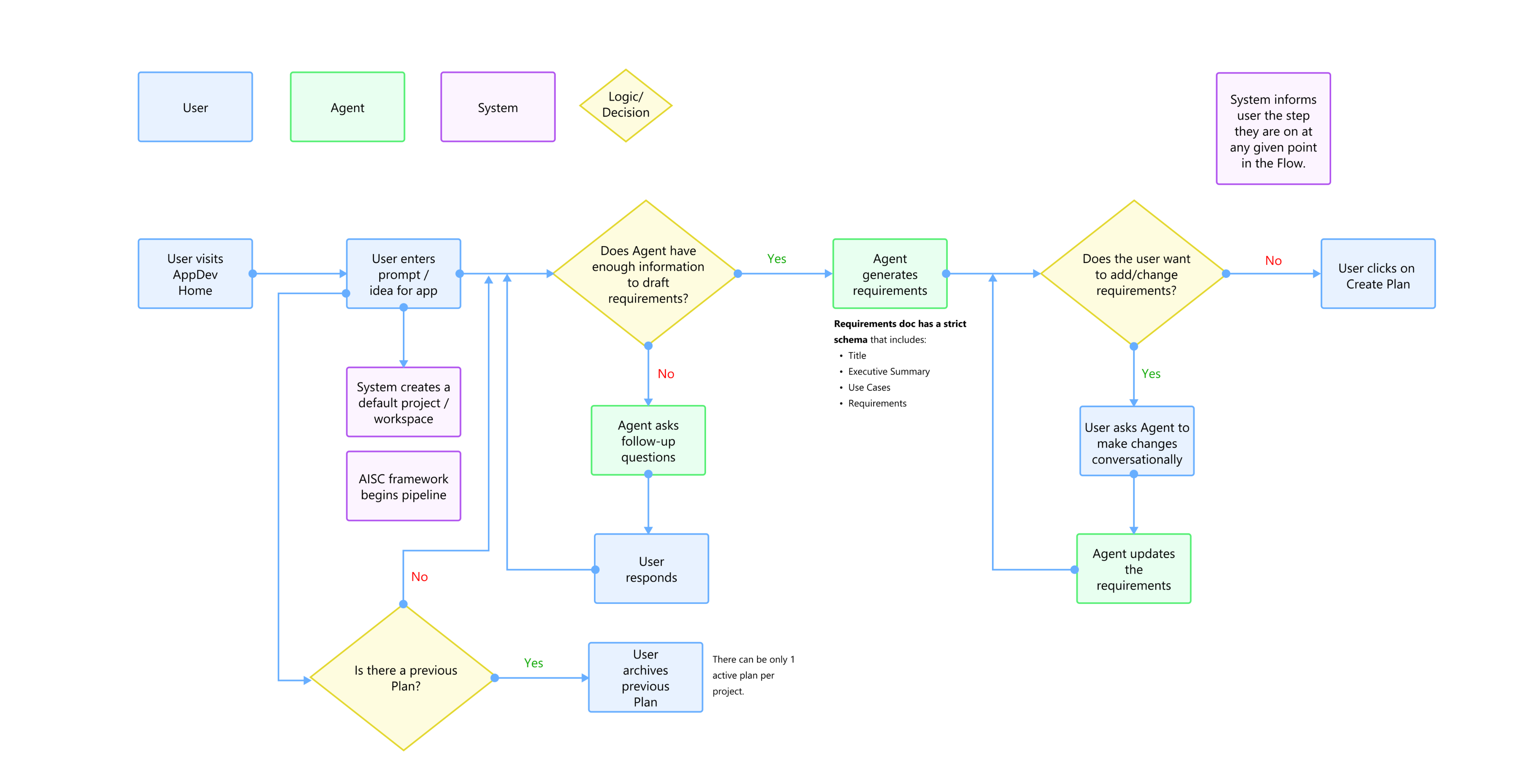
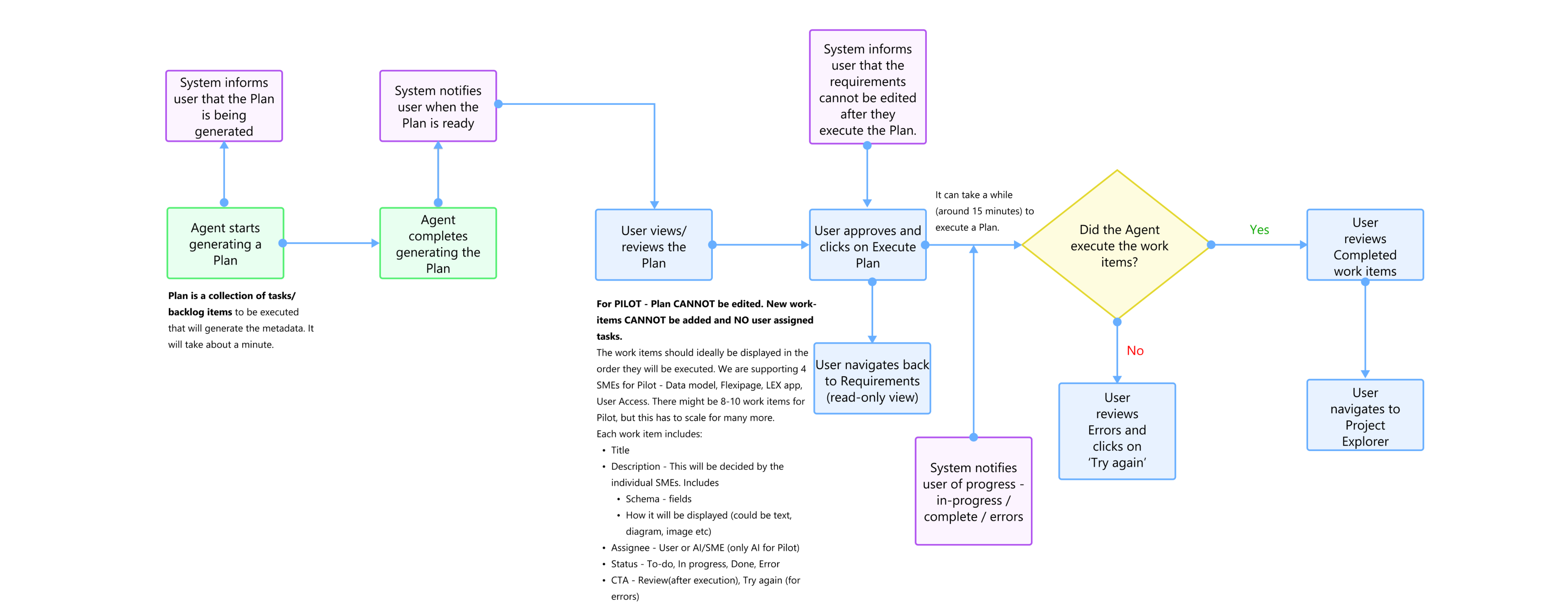
Extracting concepts users can understand

I created a workflow that exposes only the terms users need to know, hiding complex technical concepts behind a simple interface.

Workflow Workflow 2

From architecture to wireframes

I partnered closely with engineering to shape the vision while navigating technical realities, ensuring our designs were both ambitious and feasible.

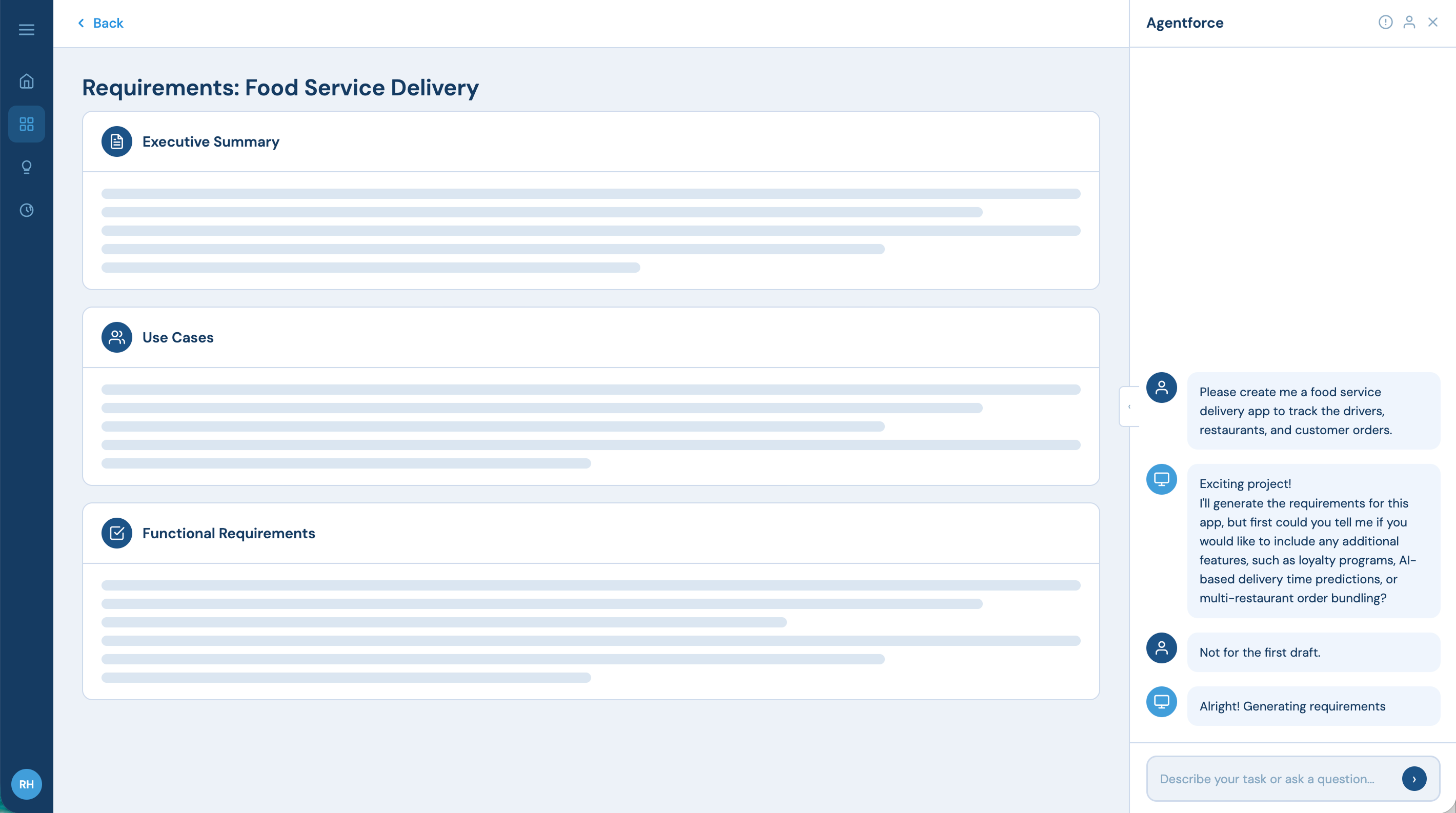
Start conversation on Home Screen

Start conversation on Home Screen

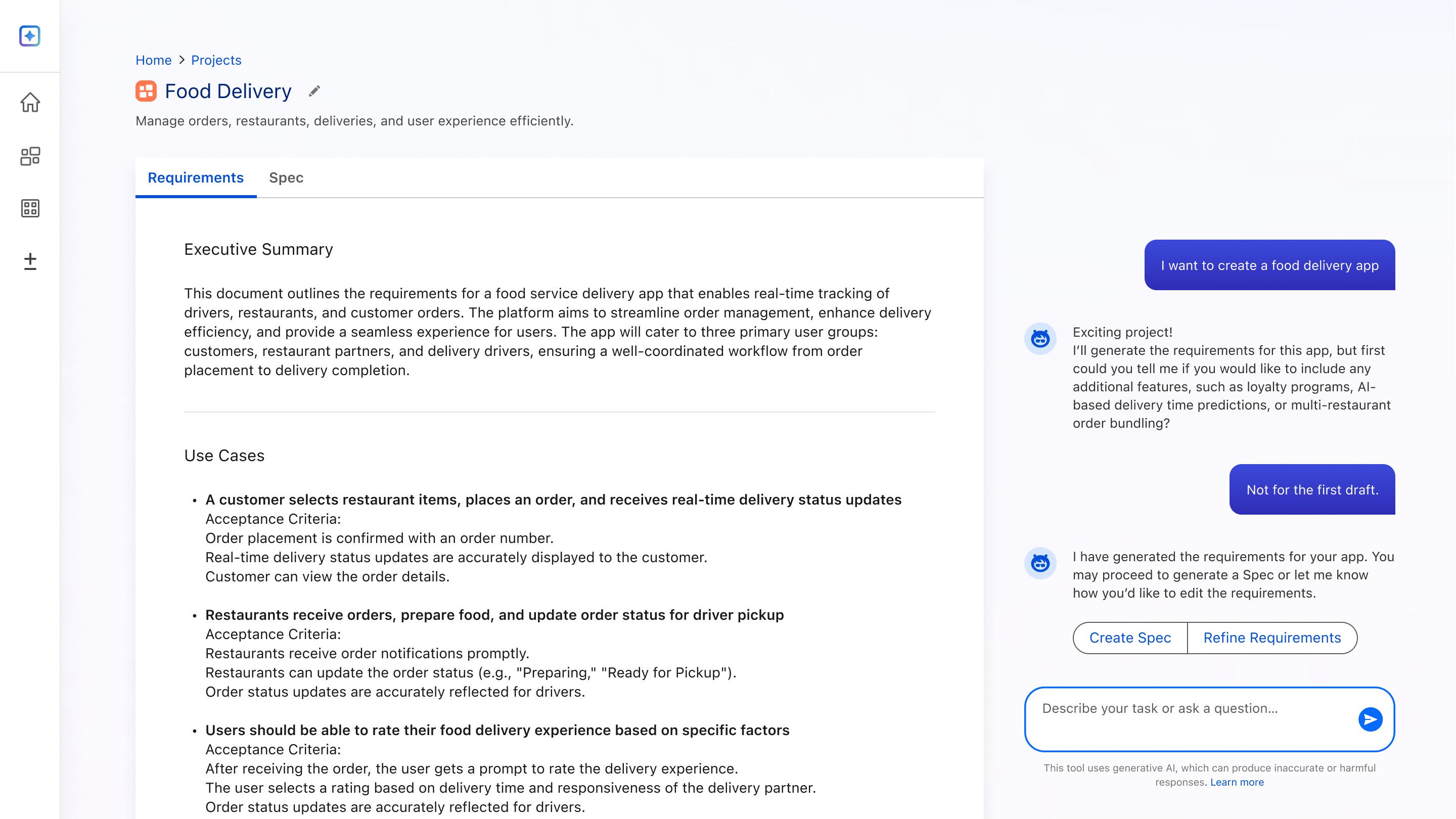
View and refine generated Requirements

View and refine generated Requirements

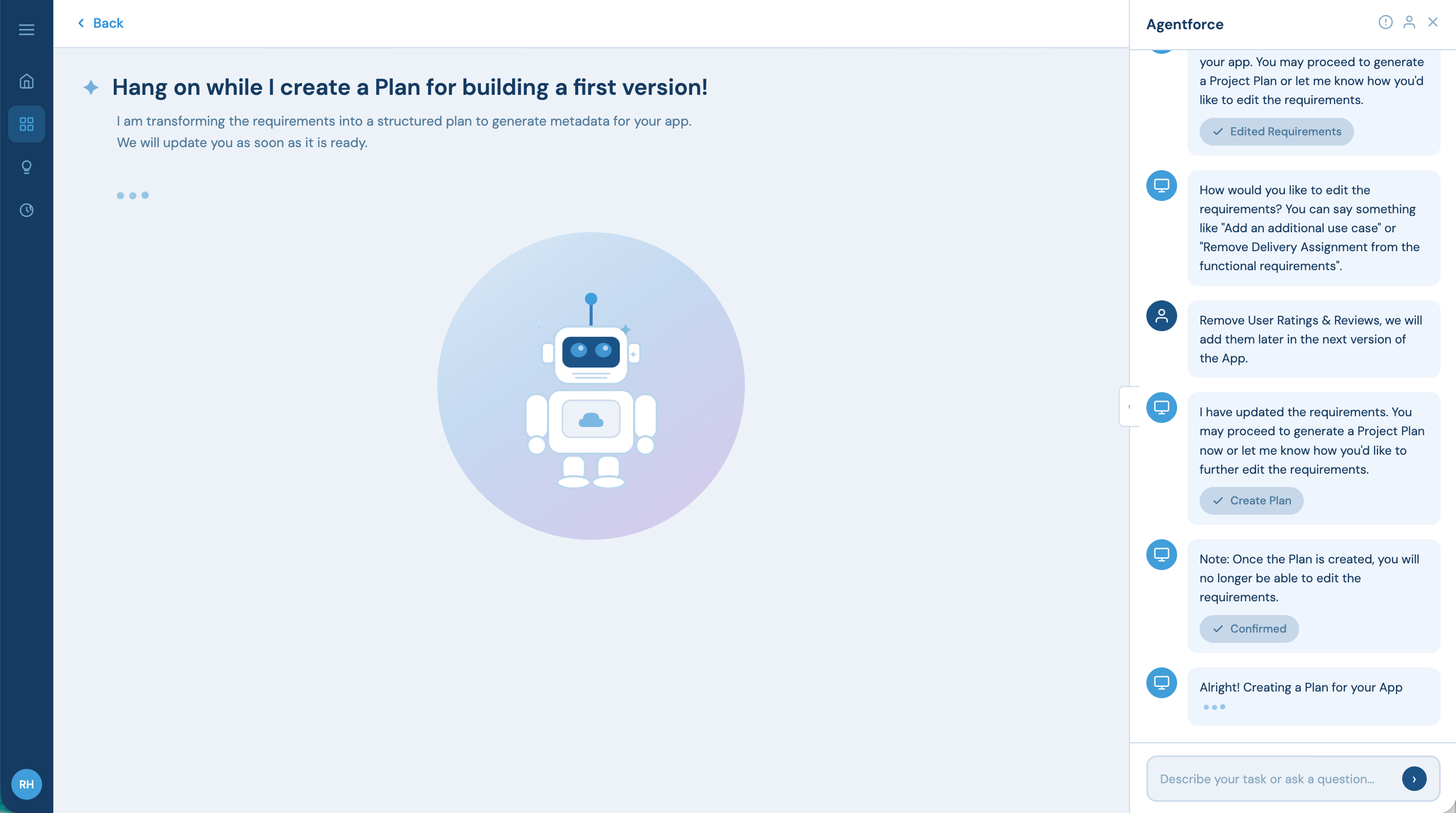
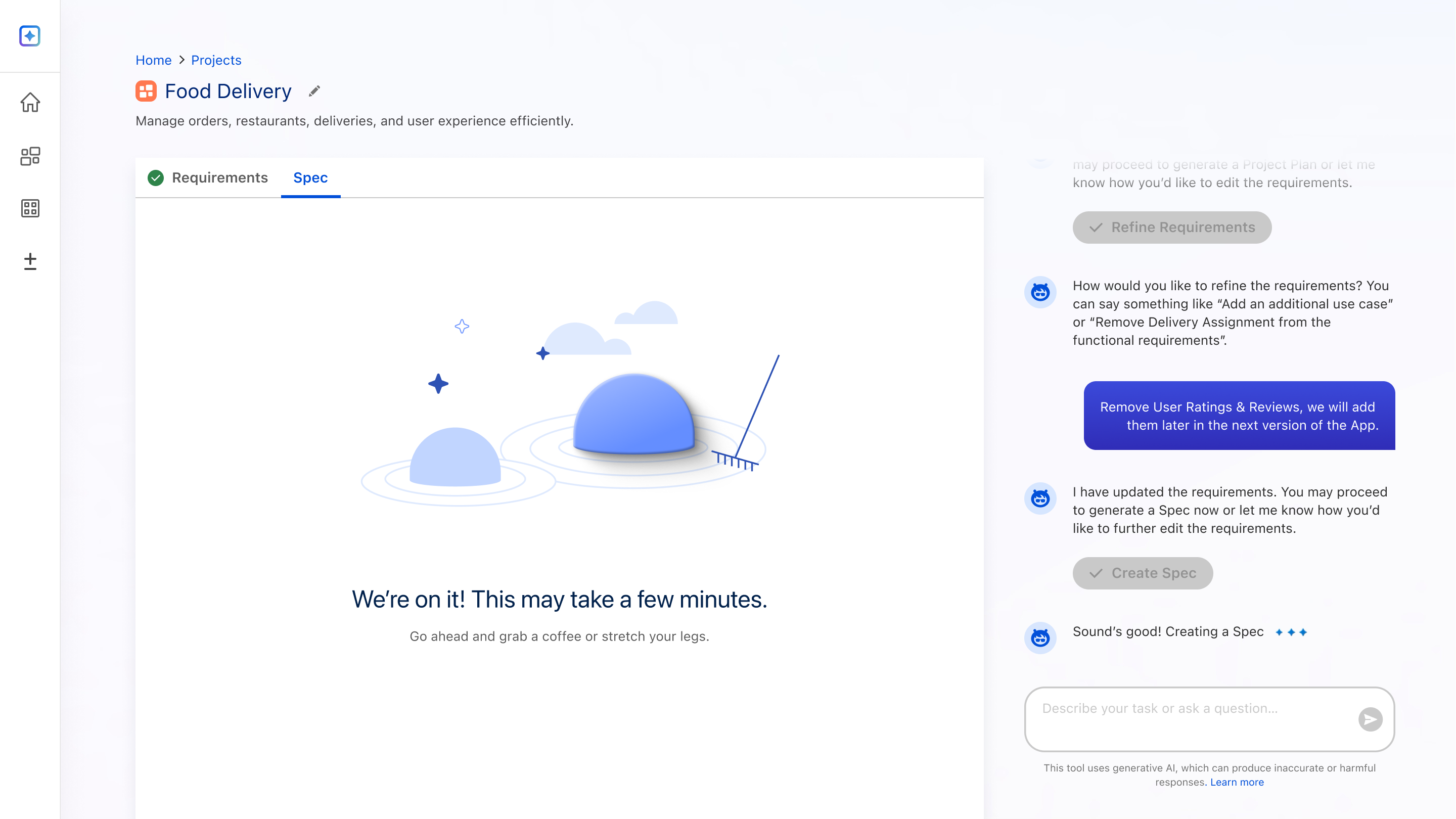
View status (loading states)

View status (loading states)

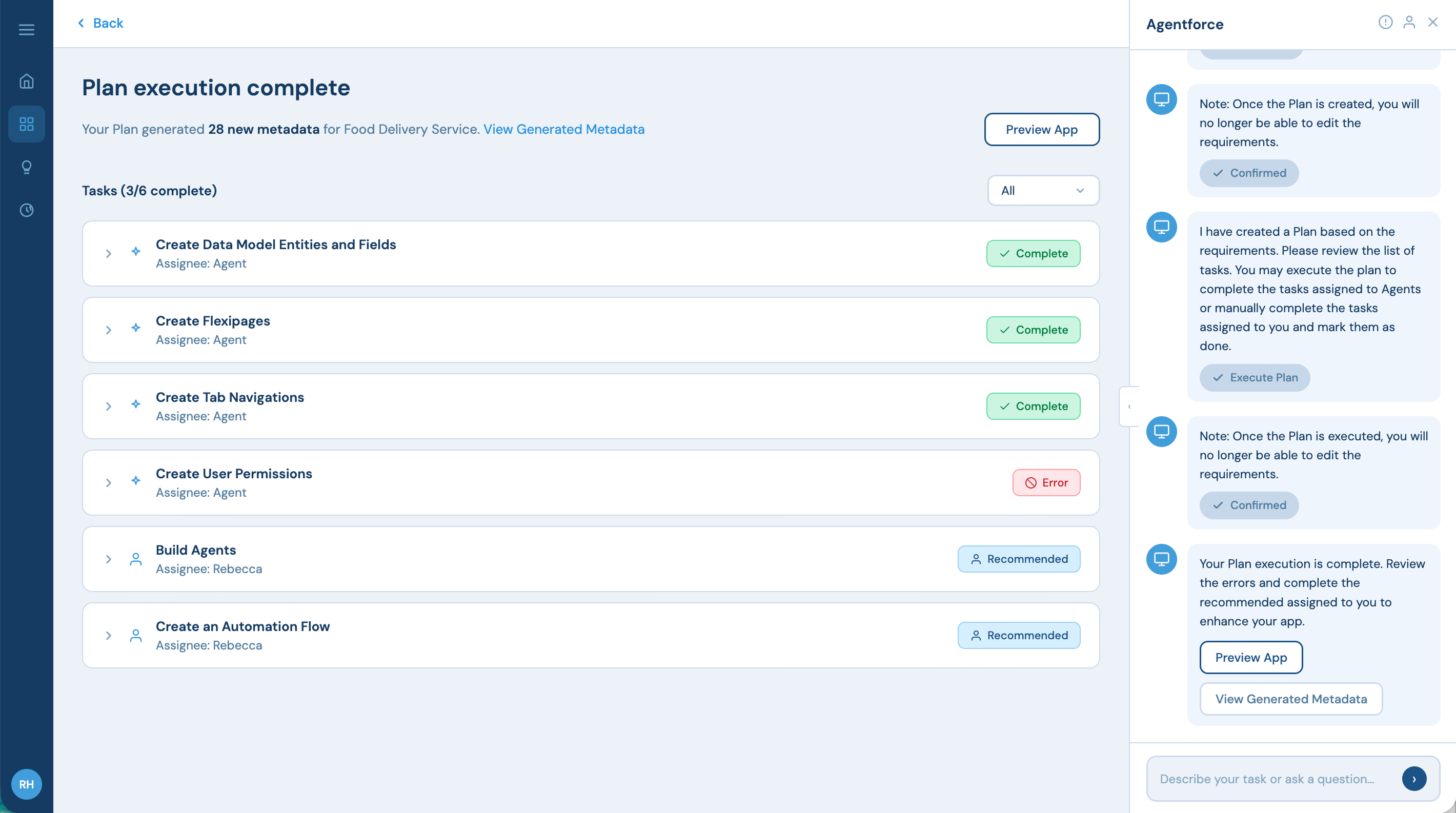
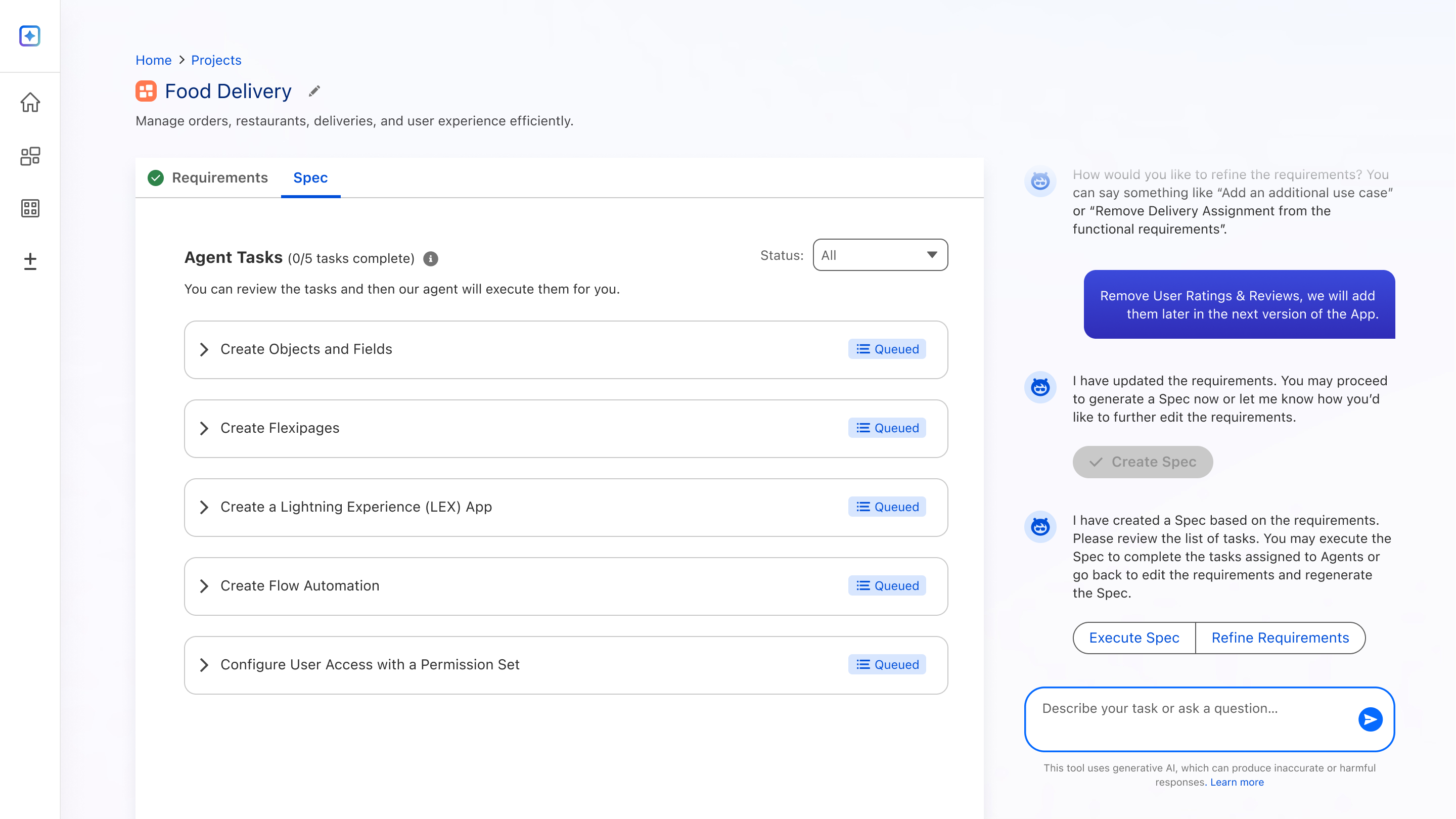
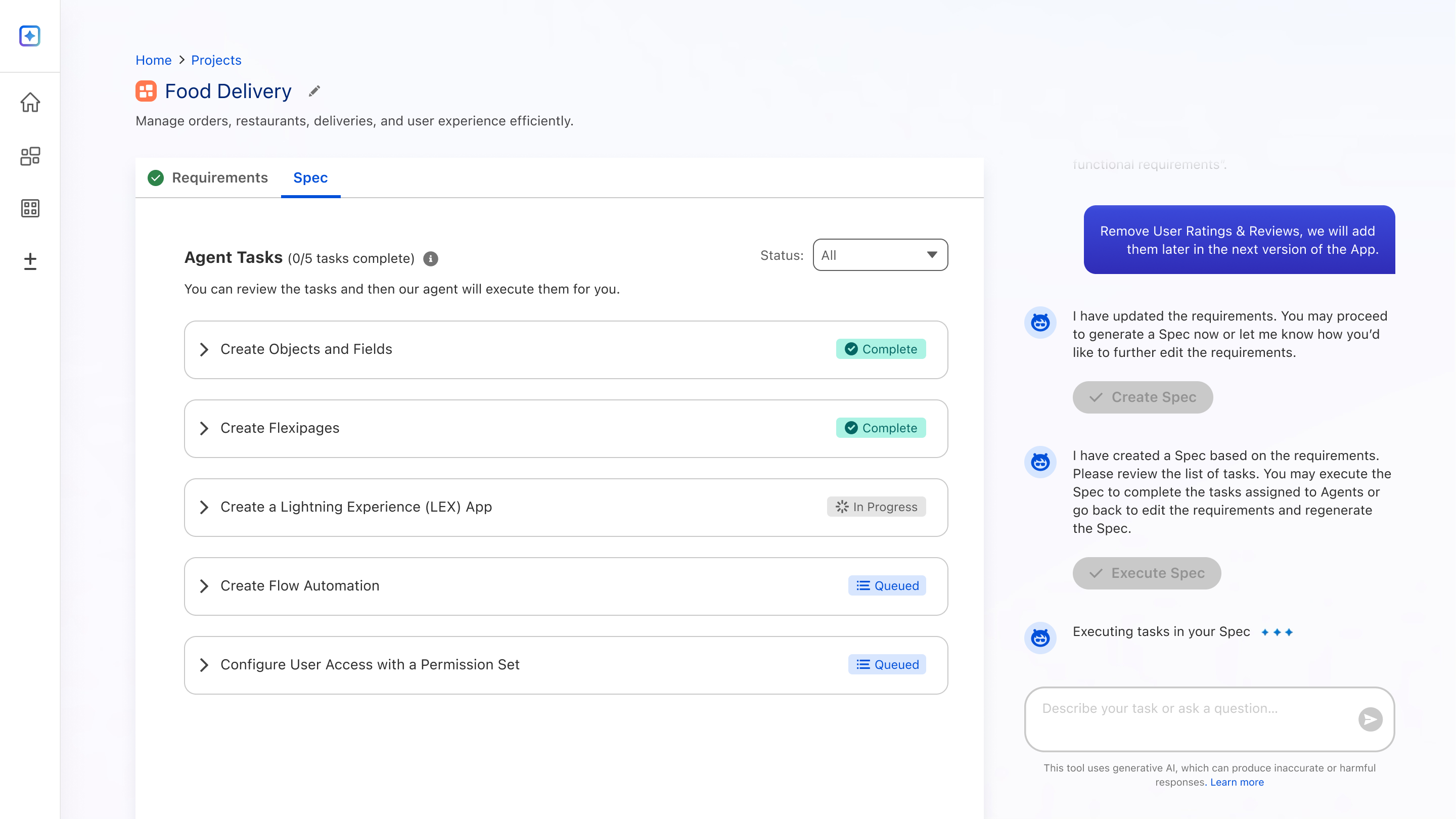
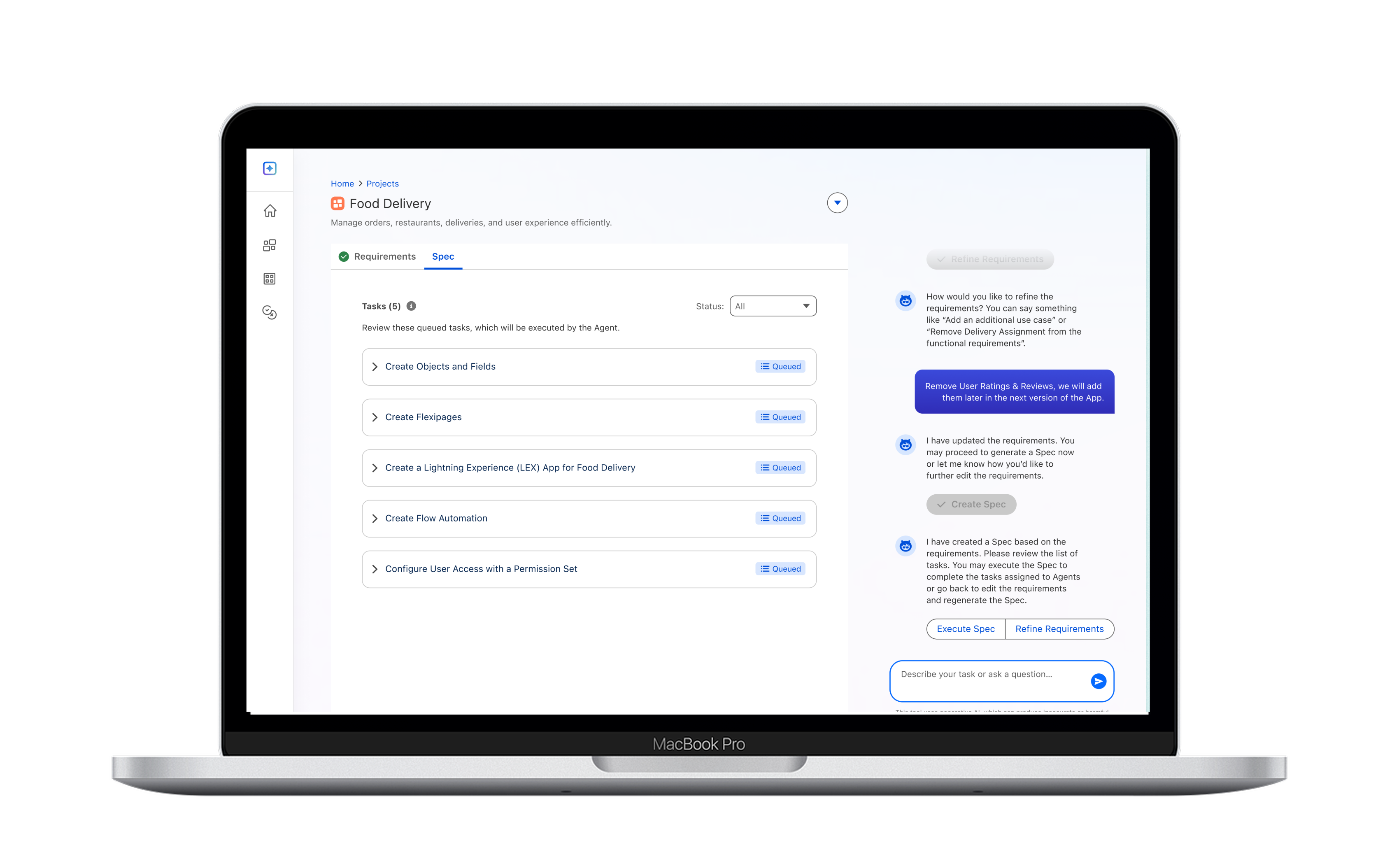
View Plan - list of Agent tasks

View Plan - list of Agent tasks

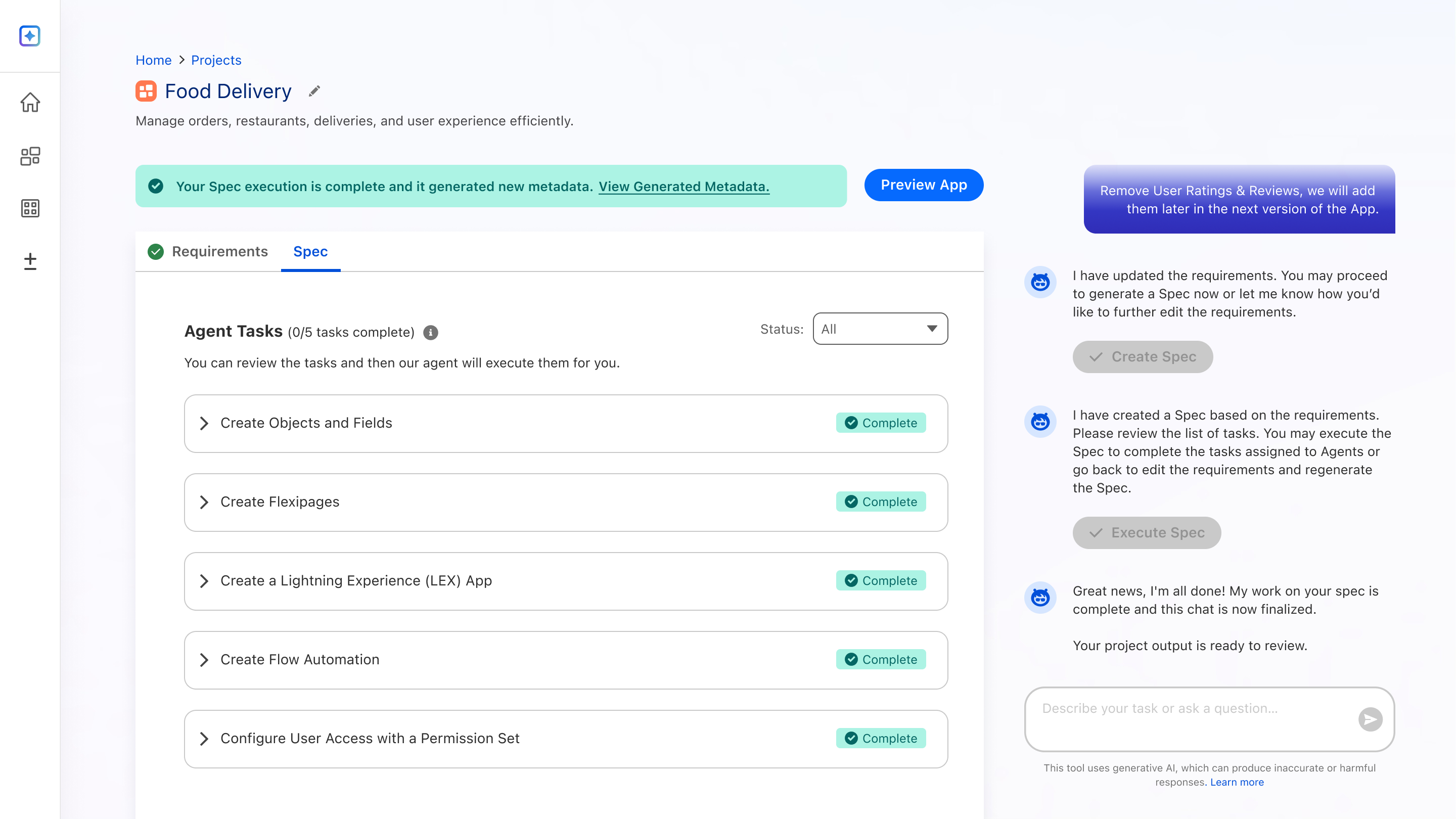
View status of executed Plan

View status of executed Plan

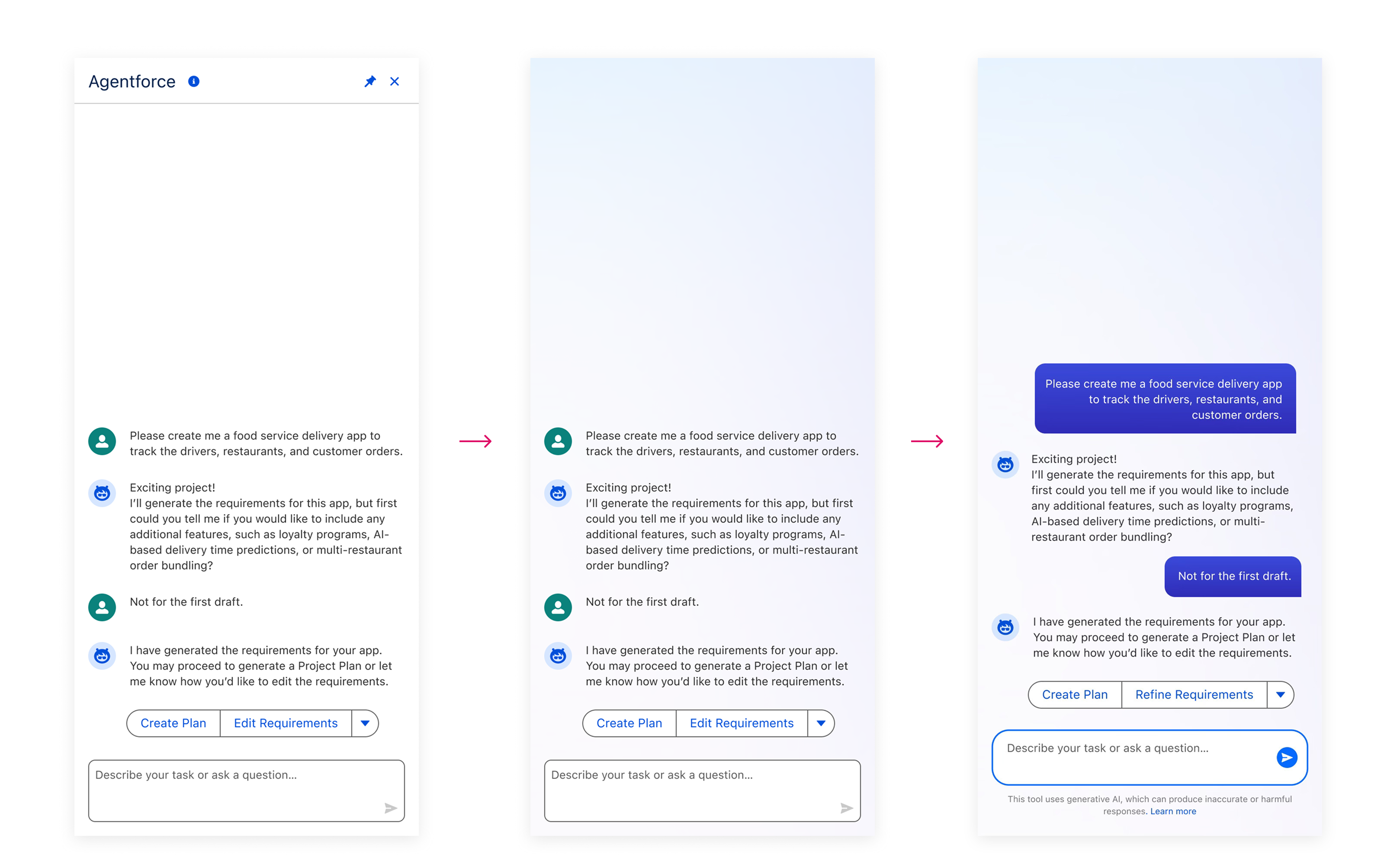
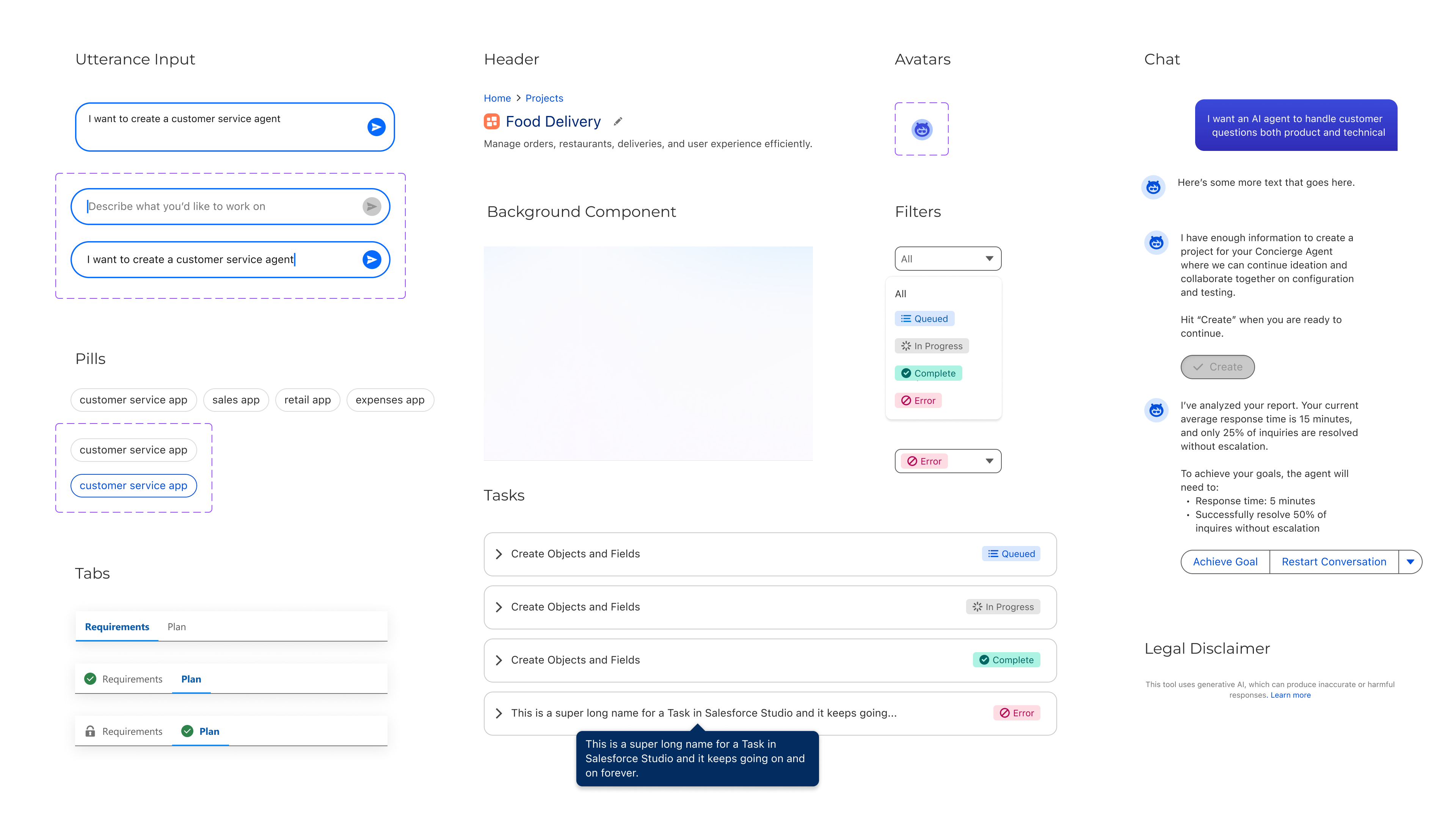
Elevating Agentforce chat visual experience through cross-team collaboration

Enhanced the visual quality and usability of the existing Agentforce chat experience, raising the overall design bar. Partnered closely with engineering to identify gaps and filed technical dependencies (TDs) with the Agentforce Conversational Panel team to drive cohesive, scalable improvements.

Agentforce Chat Visual Enhancements

Crafting high-fidelity, design-system–driven experiences

Designed polished, cutting-edge high-fidelity screens using expressive gradients and modern visual treatments, while leveraging existing design system components to ensure consistency, scalability, and fast delivery.

Studio Home Requirements Interim Message - Creating Plan Plan - Backlog Items Plan - Backlog Items Plan - Backlog Items

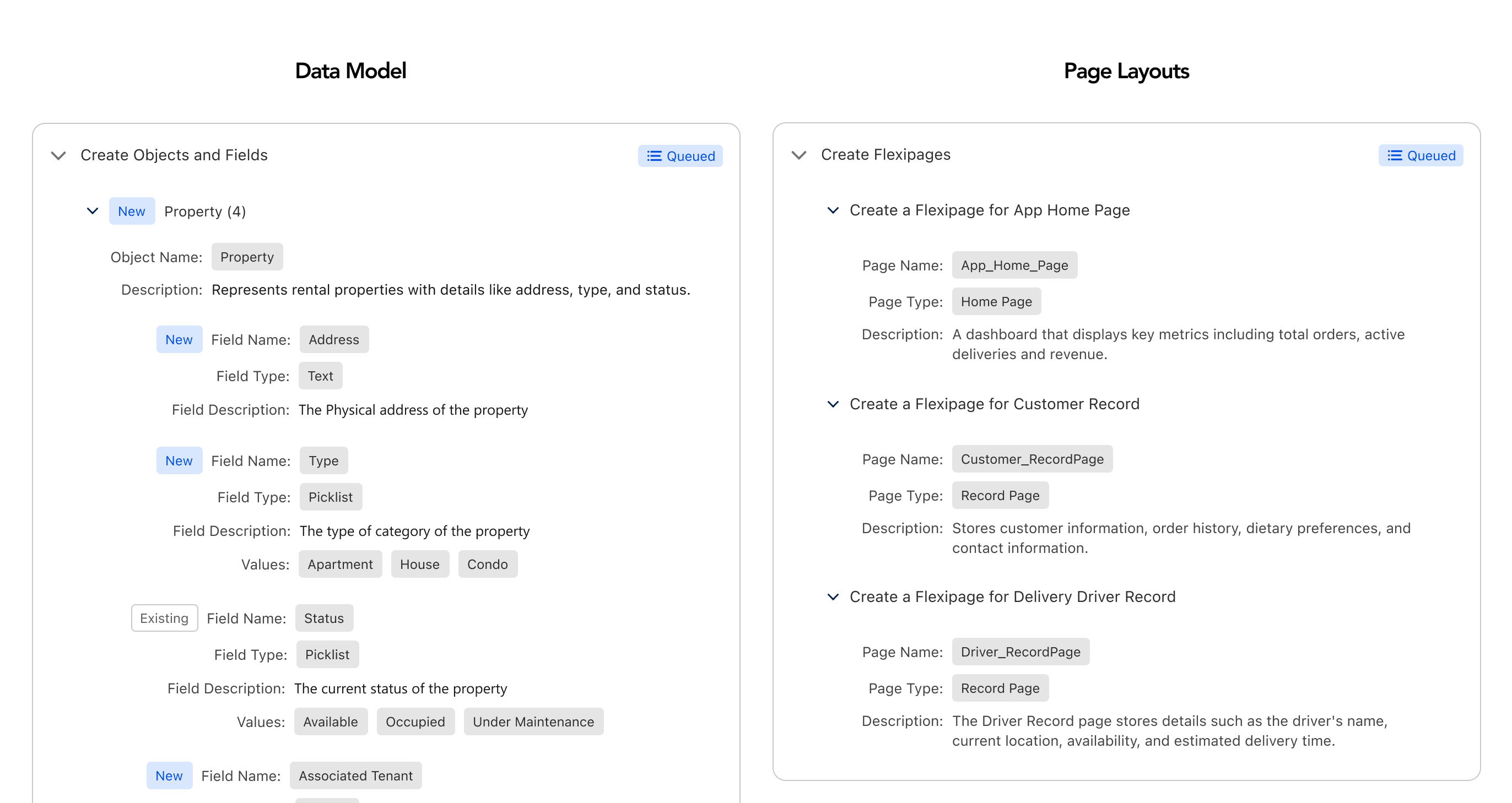
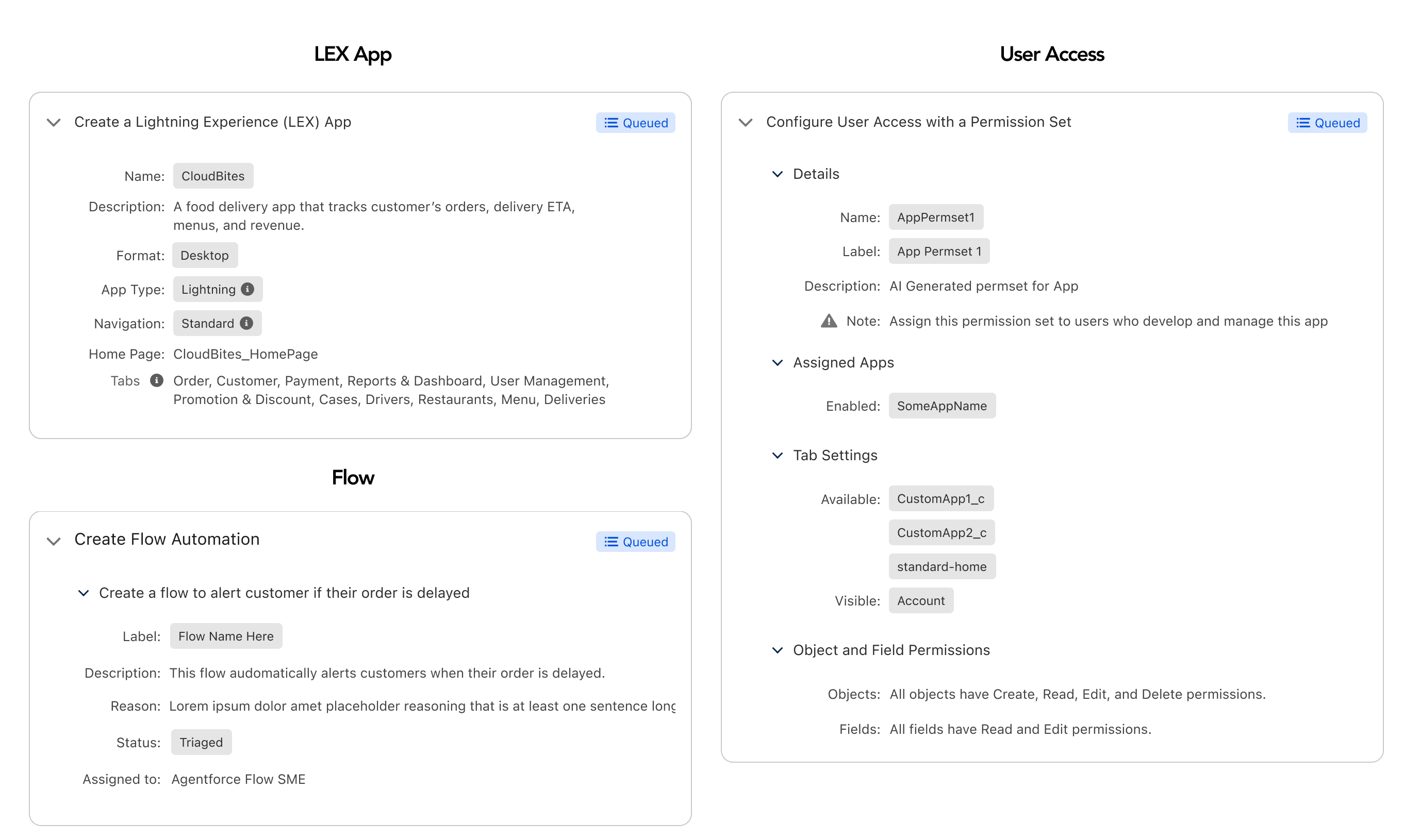
Metadata schema was difficult for low-code admins to interpret

I led a team of five designers to translate complex JSON logic from the SME teams into cohesive, scalable UI designs built on standard components - creating consistency across multiple teams.

SME Integration SME Integration

Documenting components for seamless developer handoff

Created detailed component documentation outlining states, behaviors, edge cases, and usage guidelines to ensure clarity during implementation.

Component documentation

Iterating toward the final demo

As the designs matured, I facilitated design critiques and collaborative working sessions that aligned teams around a shared vision and resulted in a polished end-to-end experience presented to the EVP of Salesforce Platform.

Metrics that made launch successful

The product demonstrated strong user engagement and satisfaction across multiple dimensions, validating our approach and revealing clear value for customers.

~70%
of initiated prompts resulted in completed deployments
6.1
Overall Ease of Use
5.7
Overall Confidence
3.6
Feature Score
4.0
Usability Score
4.5
Appearance Score

* Scale of 1-7 (1-Very Difficult, 7-Very Easy)

** Scale of 1-7 (1-Not at all Confident, 7-Extremely Confident)

(< 3 = Critical to address, 3.1-4.4 = Challenging, 4.5-6 = Improvable, >6.1 Good)

*Feature score is out of 5 and reflects the overall degree of agreement participants have with Usability, Trust, Appearance, and Loyalty statements. A score above 3.0 is seen as a positive score.

Bajaj
Delta
Disney
Nebula Consulting
Pearson
AllSherpas
Company
"The experience exceeded my expectations…I think the product is really promising and on the whole I found it to be a really positive experience…As a consultant, I was looking for a tool that would help with wireframing that would generate a quick solution as a starting point, and I've really appreciated the way the product works, including some sample data as it generates a solution."
- Nebula Consulting

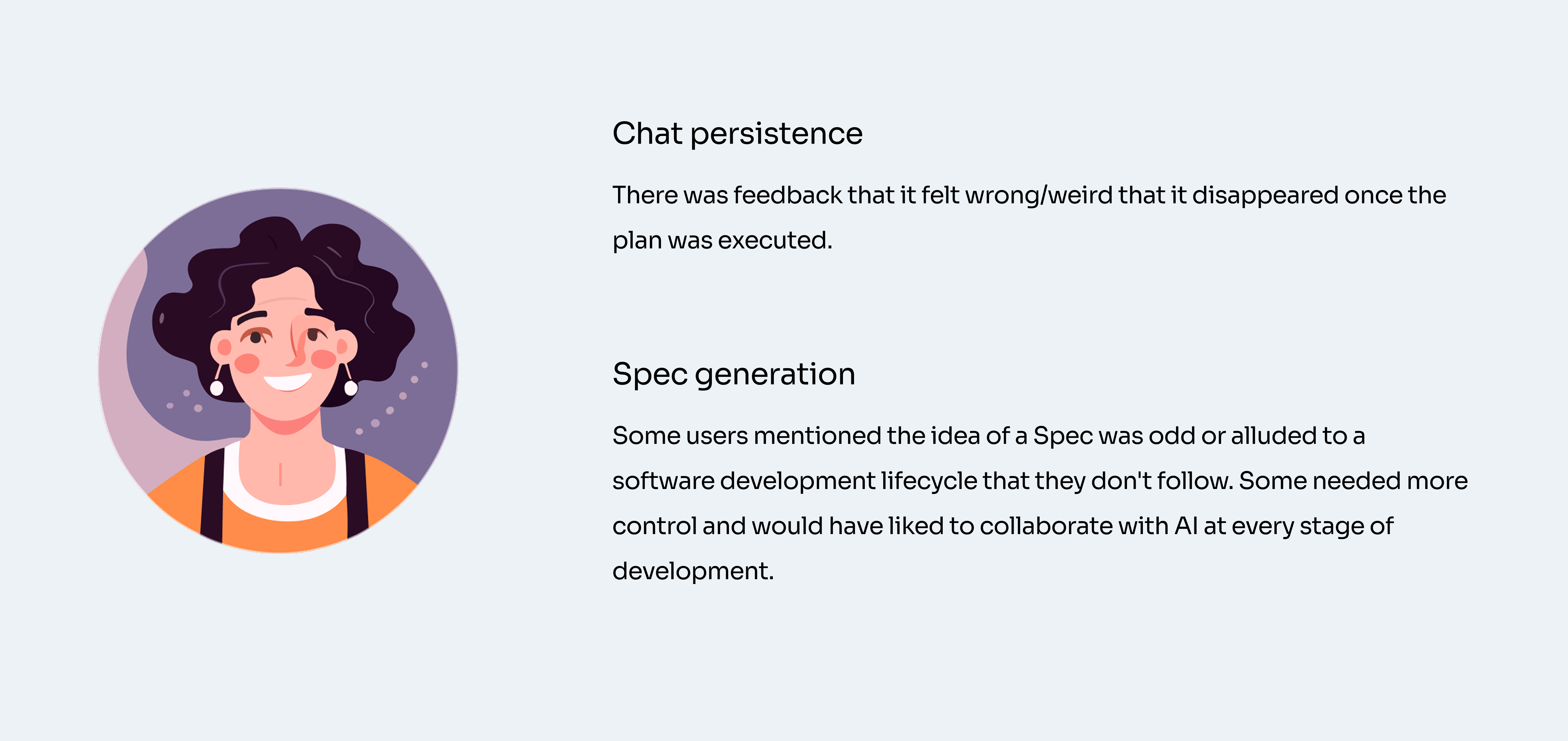
Customers validated the approach but noted improvements

Customer Feedback

Driving product strategy forward

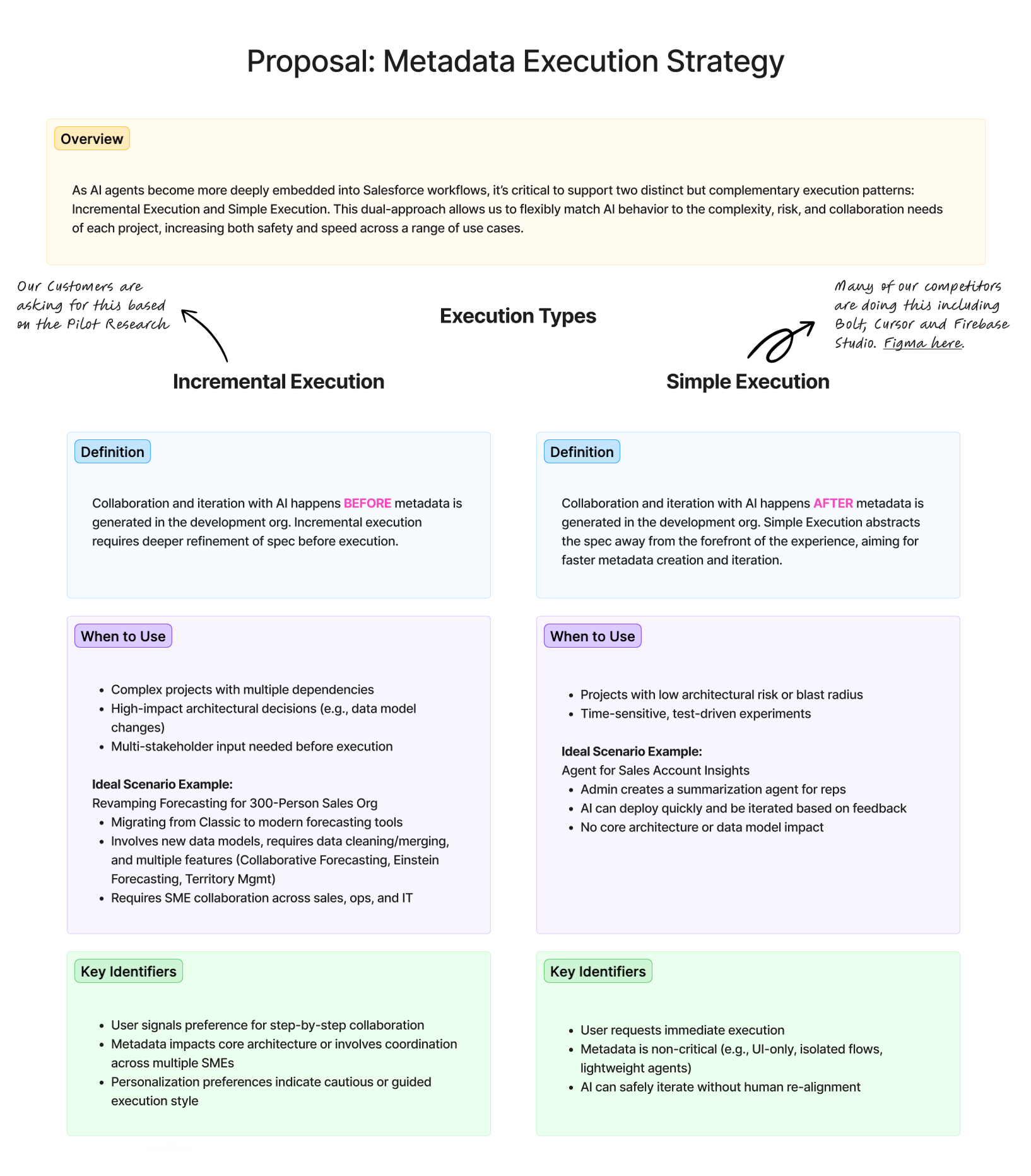
Based on customer feedback, I proposed a flexible metadata execution model, giving users the choice to build apps incrementally with AI or all at once. I presented the vision to Engineering and Product leadership, and it was adopted for the Dreamforce roadmap.

Product Strategy

Designing for incremental execution

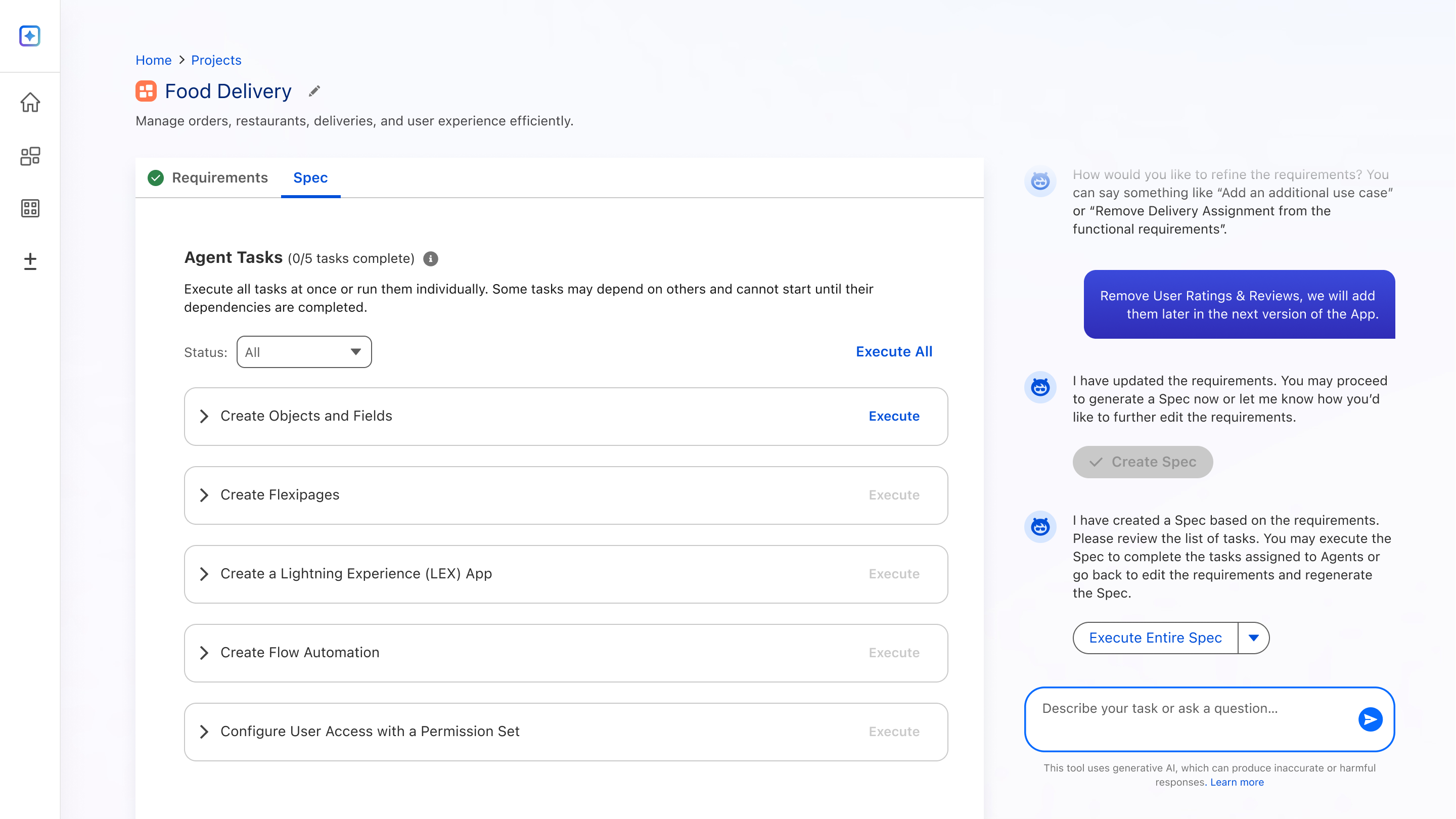
Finally, I introduced a new workflow that helps customers build and execute their apps step by step - giving them more control, confidence, and flexibility throughout the process.

Incremental execution

Reflections

This project deepened my understanding of AI systems and how they can reshape low-code development. I collaborated across clouds to align on scalable AI patterns and led a large, distributed design team toward a shared vision. Along the way, I learned the importance of having candid, sometimes challenging conversations with engineering partners - breaking constraints to ultimately deliver a better customer experience.

Other Case Studies

Let's Connect

I'm always open to discussing new opportunities, collaborations, or just chatting about design. Feel free to reach out!

divs.hariharan@gmail.com